
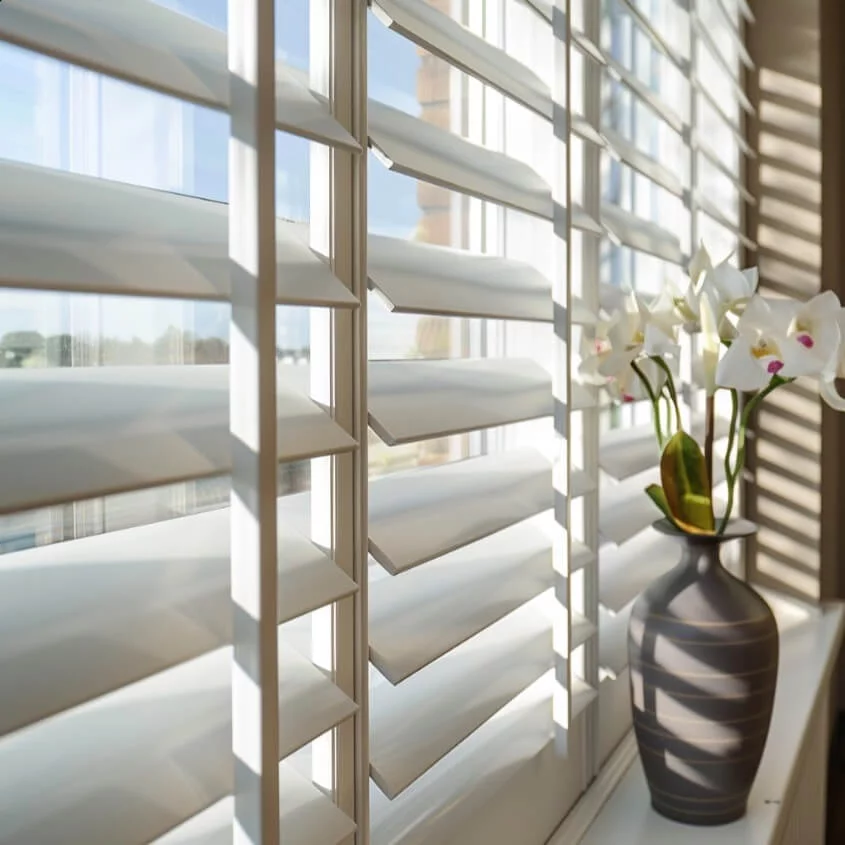
Your leather sofa near the west-facing window is already showing those telltale bleached streaks. The afternoon sun pouring through your Caughlin Ranch picture windows isn’t just uncomfortable—it’s actively destroying your furniture, hardwood floors, and driving your NV Energy bill through the roof. With Summer 2026 heat wave predictions already circulating among Reno homeowners, finding effective sun protection isn’t optional anymore.
Here’s the hard truth: standard curtains and cheap blinds fail within 18 months under Reno’s high desert UV intensity. At 4,505 feet elevation, our city receives approximately 15-20% more UV radiation than sea-level communities (Source: U.S. Environmental Protection Agency UV Index Data, 2023). This guide breaks down exactly which shutters protect Reno homes—and which ones waste your money.
Why Reno’s High Desert Climate Demands Specialized Shutters
Living near the Truckee River Walk, you experience something visitors don’t understand: Reno isn’t just hot—it’s intensely bright. Our 252 sunny days per year (Source: U.S. Climate Data, 2024) combined with low humidity creates a furniture-fading, energy-draining environment that coastal window treatments simply can’t handle.
The UV Damage Timeline in Reno Homes
Within your first summer in a Somersett home with unprotected windows, you’ll notice:
- Fabric fading on south and west-facing furniture within 90 days
- Hardwood floor discoloration near windows within 6 months
- Artwork and photography degradation within one year
- Leather cracking and surface damage by month 18
The National Fenestration Rating Council reports that untreated windows allow up to 75% of UV rays to penetrate interior spaces (Source: NFRC Technical Document 100-2020). For Reno’s elevated UV exposure, that percentage translates to accelerated damage you can literally watch happen.
Heat Gain: Your NV Energy Bill’s Silent Enemy
Beyond fading, unprotected windows turn your home into a greenhouse. The U.S. Department of Energy confirms that approximately 76% of sunlight hitting standard double-pane windows enters as heat (Source: U.S. Department of Energy, Energy.gov Windows Guide, 2023). In a typical Caughlin Ranch ranch-style home with 15 windows, that’s equivalent to running a space heater in every room during July afternoons.
Shutter Types Ranked for High Desert Performance
Not every shutter survives Reno’s conditions. Here’s what actually works for our ranch-style homes and modern mountain contemporary designs—and what fails within years.
Composite Shutters: The High Desert Champion
Engineered wood composite shutters dominate Reno installations for good reason. Unlike solid wood, composite materials resist the dramatic temperature swings we experience—often 40°F differences between morning and afternoon. They won’t warp, crack, or fade when your west-facing windows hit 140°F surface temperatures during August heat waves.
Best for: Ranch-style homes throughout Somersett where large picture windows face afternoon sun.
Aluminum Shutters: Maximum Heat Reflection
For modern mountain contemporary homes near the Reno Arch downtown district, aluminum plantation shutters offer superior heat reflection. Their metallic core bounces solar radiation rather than absorbing it—critical when you’re dealing with floor-to-ceiling glass popular in newer construction.
Vinyl Shutters: Budget-Friendly but Limited
Vinyl shutters cost 30-40% less upfront but typically show yellowing and brittleness within 3-5 years under Reno’s UV bombardment. If budget constraints are real, reserve vinyl for north-facing windows only.
| Shutter Material | UV Resistance | Heat Reflection | Lifespan in Reno | Best Window Orientation |
|---|---|---|---|---|
| Composite | Excellent | Very Good | 20-25 years | All orientations |
| Aluminum | Excellent | Superior | 25-30 years | South/West facing |
| Solid Wood | Good (with finish) | Good | 10-15 years | North/East facing |
| Vinyl | Poor | Moderate | 5-8 years | North facing only |
Installation Considerations for Reno Architecture
Your shutter selection means nothing if installation ignores Reno’s architectural realities. The dominant ranch-style homes throughout Caughlin Ranch and Somersett present specific challenges that generic installers miss.
Ranch-Style Window Challenges
Classic Reno ranch homes feature wide, horizontal window configurations—often 60-72 inches across. Standard shutter panels can’t span these openings without center divider rails that obstruct views of the Sierra foothills. Your installer should recommend bi-fold or sliding shutter configurations that stack completely clear of the glass.
Modern Mountain Contemporary Requirements
Newer construction near the Truckee River Walk often incorporates floor-to-ceiling glass walls. These require track-mounted shutter systems rather than traditional frame mounting. Weight becomes critical—aluminum shutters on overhead tracks operate smoothly for decades while wood alternatives sag and bind.
Historic Downtown Considerations
If your home sits in Reno’s historic districts near the Reno Arch, exterior-mounted shutters may be your only option due to window depth limitations. Ensure any exterior installation uses marine-grade hardware—our freeze-thaw cycles destroy standard zinc-plated hinges within two winters.
“The difference between a shutter that lasts 5 years and one that lasts 25 years in Reno comes down to material selection and installation precision. Our high desert environment is a stress test that exposes every shortcut.”
Energy Savings: What Reno Homeowners Actually Experience
Let’s talk real numbers—not manufacturer marketing claims. The Lawrence Berkeley National Laboratory found that interior shutters reduce cooling energy consumption by 25-30% when properly sized and operated (Source: Lawrence Berkeley National Laboratory, Windows and Daylighting Group, 2022). For your NV Energy summer bills, that’s meaningful.
Calculating Your Potential Savings
The average Reno household pays $157 monthly for electricity during summer peak months (Source: U.S. Energy Information Administration, Nevada State Profile, 2024). If 40% of that cost goes toward air conditioning—a conservative estimate for July—quality shutters could reduce your monthly bill by $15-20 during cooling season.
Over a 20-year shutter lifespan, that’s $1,200-$1,600 in energy savings before considering the prevented furniture replacement costs.
- Audit your highest-exposure windows (typically south and west facing)
- Calculate square footage requiring coverage
- Request quotes specifying composite or aluminum materials only
- Compare 10-year total cost including energy savings projections
- Verify installer experience with Reno’s specific architectural styles
Why Hometown Value Matters for Your Shutter Investment
Reno isn’t Scottsdale or Palm Springs. Our community values straightforward pricing, honest recommendations, and installers who show up when promised. When you’re protecting a Somersett home that represents your family’s largest investment, you deserve a window treatment partner who understands that.
What to Expect From Local Specialists
Reputable Reno shutter installers offer free in-home consultations that assess your specific sun exposure patterns—not just generic square footage pricing. They’ll identify which windows need premium UV protection and which can use more economical options. That’s the hometown value approach: right-sizing your investment rather than maximizing their invoice.
The American Architectural Manufacturers Association recommends homeowners obtain at least three quotes for window treatment projects exceeding $2,000 (Source: AAMA Consumer Guide to Window Selection, 2023). In Reno’s market, quality composite plantation shutters typically run $25-45 per square foot installed—so a 10-window project easily crosses that threshold.
Questions to Ask Before Signing
- What material do you recommend for our specific elevation and sun exposure?
- How do you handle the wide window spans common in Caughlin Ranch homes?
- What’s your warranty on both materials and installation labor?
- Can you provide references from Reno homeowners with 5+ years of use?
- How do your shutters perform during our freeze-thaw winter cycles?
Ready to stop watching your furniture fade and your NV Energy bills climb? Schedule your free in-home shutter consultation with Reno’s trusted window treatment specialists today. We’ll assess your specific sun exposure, recommend the right materials for your architectural style, and provide transparent pricing with no hidden fees.
Frequently Asked Questions
Below you’ll find answers to the questions Reno homeowners ask most frequently about shutter selection and installation.
Frequently Asked Questions
How long does professional shutter installation take for an average Reno home?
Most Reno installations covering 8-12 windows complete within one business day. Custom orders for unusually sized windows in older Caughlin Ranch properties may require a second half-day visit for final adjustments. Your installer should provide a specific timeline during the in-home consultation based on your window configurations.
Do shutters work better than solar window film for UV protection?
Shutters and solar film serve different purposes. Solar film reduces UV transmission by 99% but doesn’t address heat gain control or privacy. Shutters block 100% of light when closed and allow adjustable control throughout the day. Many Somersett homeowners combine both—film on east-facing bedroom windows for morning sleep protection, shutters on main living areas for versatile light control.
Can I install shutters myself to save money on labor costs?
DIY installation is possible for standard rectangular windows under 36 inches wide. However, the wide horizontal windows common in Reno ranch-style homes require precise frame shimming to prevent binding over time. Improper installation voids most manufacturer warranties. Given that labor typically represents only 20-25% of total project cost, professional installation protects your larger material investment.
What maintenance do composite shutters require in Reno’s dusty climate?
Composite shutters need dusting every 2-3 weeks during high-wind seasons common near the Truckee River corridor. Use a microfiber cloth or vacuum brush attachment. Deep cleaning twice yearly with mild soap and water keeps louvers operating smoothly. Unlike wood shutters, composites never require refinishing or repainting regardless of sun exposure intensity.

