Your pergola in Lakeridge looked stunning when you built it—open beams, clean lines, perfect views of the Sierra Nevada. Then July hit. By 2 PM, those beautiful timber slats cast shadows about as useful as a screen door on a submarine, and your outdoor living space became a 95-degree griddle. You’re not alone: Reno homeowners face 300+ days of sunshine annually (Source: Western Regional Climate Center, 2023), and that relentless high desert UV turns unshaded pergolas into decorative heat traps rather than functional outdoor rooms.
Here’s what most Reno residents discover too late: a pergola alone provides only 25-40% shade coverage (Source: University of Nevada Cooperative Extension, 2022), leaving you exposed to the same intense rays that make midday walks at Rancho San Rafael Regional Park feel like a survival exercise. The solution isn’t abandoning your pergola investment—it’s adding the right shade system designed specifically for our high desert climate.
Why Reno’s High Desert Climate Demands Specialized Pergola Shades
The Truckee Meadows isn’t Phoenix, and it isn’t San Francisco. Your pergola shades in Reno must handle a climate personality disorder: scorching summer afternoons, surprising spring snow, and wind gusts that funnel down from the mountains without warning. Generic shade solutions from big-box stores fail here within two seasons.
UV Intensity at 4,500 Feet Elevation
Living in Reno means your skin and your outdoor furniture absorb approximately 25% more UV radiation than at sea level (Source: U.S. Environmental Protection Agency, 2023). That Spanish-style courtyard in Double Diamond needs shade fabric rated for extreme UV exposure—minimum 95% UV block—or you’ll watch your cushions fade and your family burn despite sitting “in the shade.” Standard residential shade cloth rated for coastal climates deteriorates within 18 months under our conditions.
Temperature Swings and Material Stress
Reno experiences average daily temperature swings of 30-35 degrees (Source: National Weather Service Reno, 2024). Your pergola cover materials expand and contract constantly. Cheap aluminum tracks warp. Inferior fabrics crack. The retractable pergola canopy that worked beautifully in your friend’s backyard in Sacramento seizes up here by its second winter. You need systems engineered for thermal cycling—marine-grade stainless hardware, commercial-rated fabric with reinforced edges, and track systems with expansion tolerances.
Wind Load Requirements
Those afternoon Washoe Zephyrs regularly hit 40+ mph, and spring windstorms can exceed 70 mph. Standard outdoor pergola blinds become expensive kites. Reno-appropriate installations require wind sensors for automatic retraction, reinforced mounting brackets rated for our specific wind zone, and fabric tension systems that prevent destructive flapping.
Pergola Shade Options That Actually Work in Reno
Not every shade solution survives our climate. Here’s what performs—and what fails—based on real installations across Northwest Reno, the Lakeridge corridor, and custom mountain homes throughout Washoe County.
Retractable Fabric Canopy Systems
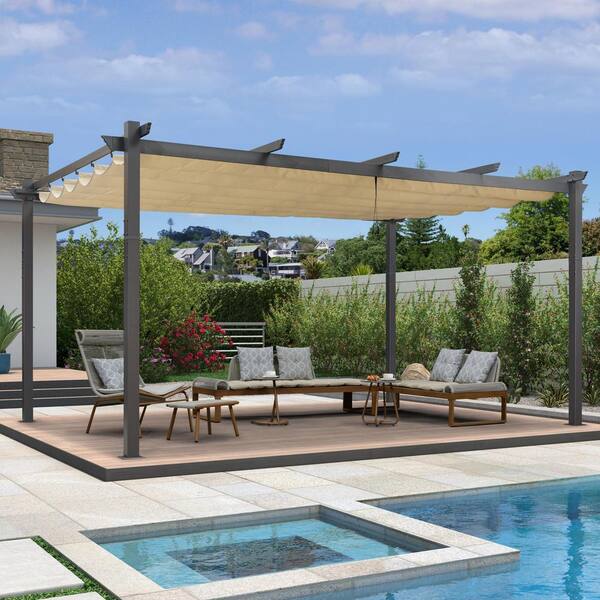
The gold standard for Reno’s contemporary outdoor living spaces. Quality retractable systems let you enjoy full sun on crisp October mornings, then deploy complete shade when August turns your patio into a frying pan. Look for:
- Solution-dyed acrylic fabric (Sunbrella or equivalent) with 10-year fade warranty
- Motorized operation with wind sensors for automatic retraction above 25 mph
- Integrated rain sensors to protect fabric during our sudden summer thunderstorms
- Powder-coated aluminum tracks rated for -20°F to 140°F temperature range
Retractable canopies integrate beautifully with the clean lines preferred in Double Diamond’s modern architecture and preserve those mountain views when you want them.
Exterior Roller Shades for Pergolas
When you need vertical sun blocking—especially for west-facing pergolas catching brutal afternoon rays—exterior roller shades provide targeted protection. These pergola covers in Reno NV work exceptionally well for Spanish-style courtyards where the pergola adjoins the home. Premium installations include:
- Side-track guidance preventing fabric blow-out in wind
- Multiple opacity options from 3% (view-through) to complete blackout
- Zipper-lock edge systems for bug-free evening entertaining
- Quick-release bottom bars for easy storage during snow events
Louvered Roof Systems
For homeowners wanting permanent shade control without fabric maintenance, louvered aluminum roofs offer a compelling alternative. Adjustable louvers rotate from fully open (maximum airflow) to fully closed (complete shade and rain protection). The initial investment runs higher—typically $80-150 per square foot installed (Source: Remodeling Magazine Cost vs. Value Report, 2024)—but longevity and zero-maintenance operation appeal to busy professionals and second-home owners.
Matching Shade Solutions to Reno’s Architectural Styles
Your pergola shade shouldn’t look like an afterthought. The best installations complement your home’s existing character while solving the practical problem of high desert sun exposure.
| Home Style | Recommended Shade Type | Design Notes |
|---|---|---|
| Spanish/Mediterranean Courtyard | Exterior roller shades with decorative valance | Terracotta or ochre fabric tones; bronze hardware |
| Contemporary Mountain Home | Motorized retractable canopy | Neutral gray fabric; minimal visible hardware; clean cassette housing |
| Traditional Ranch | Fixed shade sails with seasonal fabric | Canvas or natural-look fabric; visible tensioning hardware as design element |
| Modern Minimalist | Louvered aluminum roof system | Integrated LED lighting; matching powder coat to window frames |
Installations near Bartley Ranch often lean toward the traditional ranch aesthetic—earthy tones, visible craftsmanship, materials that echo the agricultural heritage of the area. Meanwhile, newer construction in Northwest Reno typically calls for sleeker, more automated solutions with smartphone integration.
Energy and Comfort Benefits for Reno Homeowners
Proper pergola shading isn’t just about comfort—it directly impacts your NV Energy bills during those four-month stretches when air conditioning runs constantly.
Reducing Solar Heat Gain
When your pergola adjoins your home (common in Spanish-style courtyards), an unshaded structure actually increases indoor cooling costs by 15-25% through radiant heat transfer (Source: Lawrence Berkeley National Laboratory, 2022). The sun heats those beautiful timber beams, which then radiate heat toward your walls and windows all afternoon and evening. Proper shade fabric blocks this cycle before it starts.
“The difference between our covered and uncovered patios was over 20 degrees on the same afternoon. Our west-facing family room finally stays cool enough to use before sunset.”
Extending Outdoor Living Season
Reno’s climate actually permits outdoor entertaining roughly 9 months per year—if you can solve the midday heat problem from May through September. Quality pergola shades transform your outdoor space from a 6 AM-to-10 AM zone into an all-day destination. That’s real return on your landscaping investment.
Installation Considerations for Reno Pergola Shades
Proper installation in our climate requires more than just following manufacturer instructions written for generic conditions. Reno-specific factors include:
Mounting and Structural Assessment
Adding shade systems to existing pergolas requires verifying your structure can handle the additional wind loads. A retractable canopy system adds 3-5 pounds per square foot of dead load plus significant lateral wind forces. Pergolas originally designed as purely decorative elements may need reinforcement—additional posts, larger beams, or upgraded footings—before shade installation.
Electrical Requirements
Motorized systems require dedicated circuits. If your pergola sits 40 feet from your electrical panel, you’re looking at trenching costs that can exceed the shade system itself. Discuss electrical routing early in your planning process. Solar-powered options exist but struggle during our short winter days when you’ll still want occasional shade control.
Permit Requirements
Washoe County and City of Reno building codes treat permanent shade structures differently than temporary fabric installations. Louvered roof systems typically require permits; retractable fabric canopies often don’t. Verify requirements before installation to avoid costly removal orders. A knowledgeable local installer handles permitting as part of their service.
Ready to transform your pergola from a decorative frame into genuine outdoor living space? Schedule your free pergola shade design consultation and get a solution engineered specifically for Reno’s high desert climate.
Frequently Asked Questions About Pergola Shades in Reno
How long do retractable pergola canopies last in Reno’s climate?
Quality motorized retractable systems with proper UV-rated fabric and commercial-grade hardware typically last 12-15 years in Reno’s high desert conditions with annual maintenance. Budget systems from national retailers often fail within 3-5 years due to UV degradation, thermal stress on mechanisms, and inadequate wind resistance. The key longevity factors are fabric quality (solution-dyed acrylic versus printed polyester), motor rating (minimum 500,000 cycle rating), and track material (marine-grade stainless versus plated steel).
Can I install pergola shades myself or do I need professional installation?
While DIY installation is possible for simple shade sail configurations, motorized retractable systems and louvered roofs require professional installation to maintain warranty coverage and ensure proper wind load ratings. Improper mounting in Reno’s wind conditions creates safety hazards and liability issues—a shade system that detaches during a Washoe Zephyr event can cause significant property damage. Professional installation also ensures correct electrical connections for motorized systems and proper integration with existing pergola structures.
What’s the price range for pergola shade solutions in Reno?
Costs vary significantly by system type and pergola size. For a typical 12×16-foot pergola, expect: manual shade sails ($800-1,500 installed), motorized retractable fabric canopy ($4,500-8,000 installed), exterior roller shade system ($3,000-6,000 installed), or louvered aluminum roof ($15,000-24,000 installed). These prices reflect Reno-appropriate materials and proper installation—national averages run 20-30% lower but use materials unsuited to our elevation and climate conditions.
Frequently Asked Questions
How long do retractable pergola canopies last in Reno’s climate?
Quality motorized retractable systems with proper UV-rated fabric and commercial-grade hardware typically last 12-15 years in Reno’s high desert conditions with annual maintenance. Budget systems from national retailers often fail within 3-5 years due to UV degradation, thermal stress on mechanisms, and inadequate wind resistance.
Can I install pergola shades myself or do I need professional installation?
While DIY installation is possible for simple shade sail configurations, motorized retractable systems and louvered roofs require professional installation to maintain warranty coverage and ensure proper wind load ratings. Improper mounting in Reno’s wind conditions creates safety hazards and significant liability issues.
What’s the price range for pergola shade solutions in Reno?
For a typical 12×16-foot pergola, expect: manual shade sails ($800-1,500 installed), motorized retractable fabric canopy ($4,500-8,000 installed), exterior roller shade system ($3,000-6,000 installed), or louvered aluminum roof ($15,000-24,000 installed). These prices reflect Reno-appropriate materials rated for high desert conditions.

