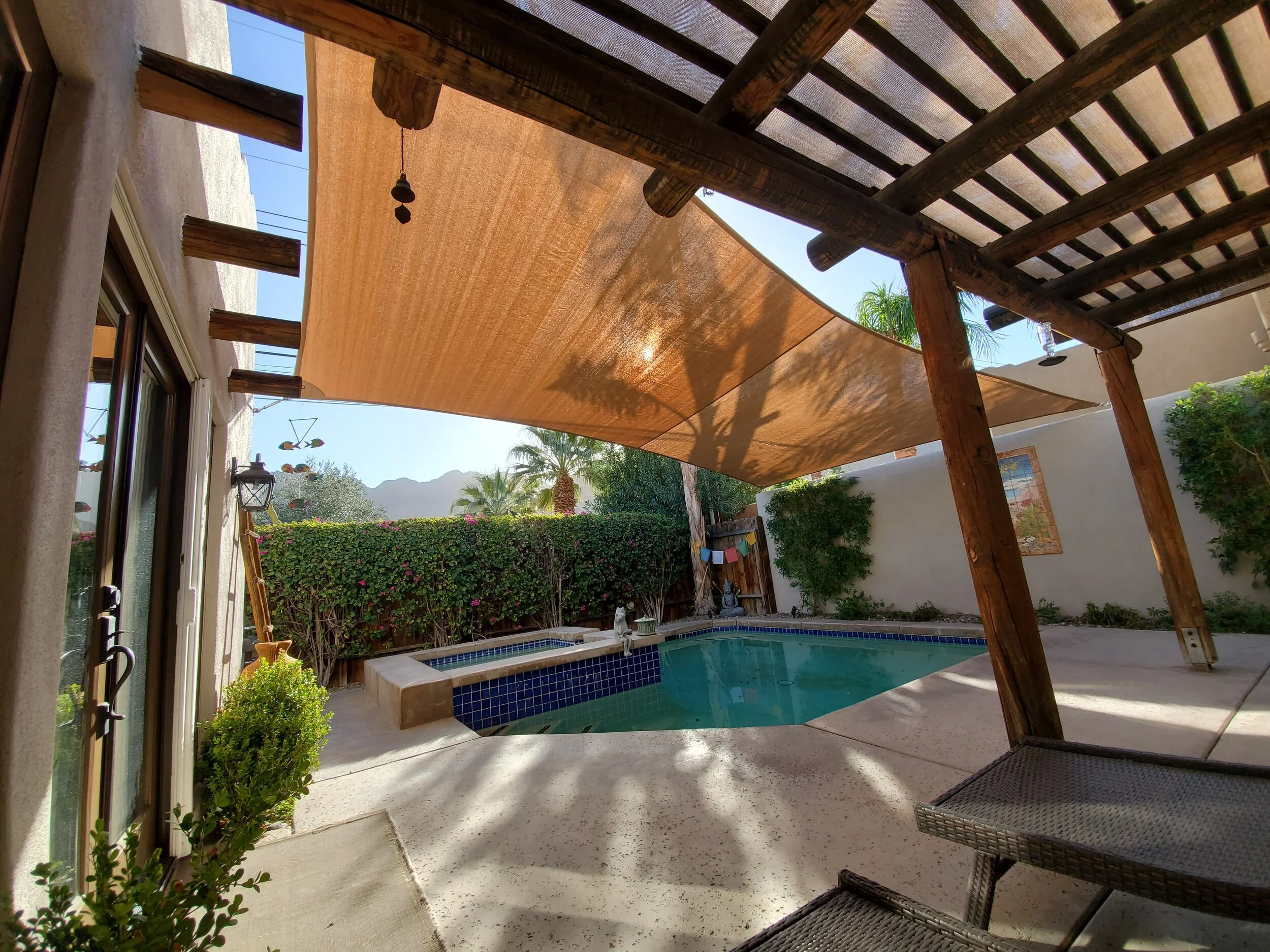
Your Arrowcreek pool deck hits 140°F by noon in July. At Reno’s 4,505-foot elevation, UV radiation intensity increases by 4% for every 1,000 feet above sea level (Source: World Health Organization, 2022), meaning your family absorbs roughly 18% more cancer-causing rays than poolside swimmers at sea level. Add chlorine splash that bleaches standard fabrics within a single season, and you understand why generic patio covers fail Reno pool owners within two years.
This guide addresses what no other Reno contractor discusses: the specific material science, installation considerations, and design strategies required for pool area outdoor shades in Reno that actually survive our high-desert conditions while keeping your family protected and your utility bills manageable through NV Energy’s peak summer rates.
Why Reno Pool Areas Demand Specialized Shade Solutions
The High-Altitude UV Problem
Reno receives an average of 252 sunny days annually (Source: National Weather Service Reno, 2023), and each of those days delivers UV radiation far more intense than coastal California pools experience. The thin atmosphere at elevation filters fewer harmful rays. When you combine this with reflective pool water—which bounces back 10-30% of UV rays according to the Skin Cancer Foundation—your poolside exposure doubles compared to standing on grass.
Homeowners in Lakemont and Wolf Run often discover this reality after purchasing their dream pool home. Standard residential awnings rated for Sacramento or Phoenix conditions fade, crack, and sag within 18-24 months under Reno’s unique combination of intense summer UV, winter freeze-thaw cycles, and persistent afternoon winds gusting 20-35 mph.
Chlorine Degradation: The Hidden Fabric Killer
Pool chemistry attacks shade fabrics from below. Chlorine gas off-gassing from your pool surface rises and settles on fabric undersides. This chemical assault accelerates UV degradation by 40-60% compared to identical materials installed away from pool water (Source: Industrial Fabrics Association International, 2021). Your beautiful new shade structure develops that characteristic gray-green chlorine stain and becomes brittle far sooner than the manufacturer warranty suggests.
For custom homes throughout Arrowcreek where pools often feature saltwater systems or advanced sanitization, material selection becomes even more critical. Salt chlorine generators create sodium hypochlorite that’s equally corrosive to untreated fabrics.
Pool-Specific Shade Materials That Survive Reno Conditions
Solution-Dyed Acrylic: The Gold Standard
Unlike surface-dyed fabrics where color sits on top of fibers, solution-dyed acrylics incorporate pigment throughout the entire fiber during manufacturing. This means color cannot bleach away from the surface. Sunbrella’s marine-grade fabrics, for example, carry 10-year fade warranties specifically because they’ve been tested against chlorinated pool environments and UV exposure equivalent to 5,000+ sun hours.
For your Reno pool area, look for these specifications:
- UV protection rating: Minimum UPF 50+ (blocks 98% of UV radiation)
- Water resistance: Minimum 600mm hydrostatic head rating for splash zones
- Chlorine resistance: AATCC Test Method 162 certification
- Colorfastness: Grade 4+ on the Blue Wool Scale
Architectural Fabric Systems vs. Retractable Options
HOA communities around Idlewild Pool and Northwest Pool areas typically require shade structures that complement existing architectural standards. You have two primary categories to consider:
| Feature | Fixed Architectural Shades | Retractable Motorized Systems |
|---|---|---|
| Wind Rating | 35-50 mph sustained | 25-35 mph (auto-retract sensors available) |
| Snow Load | 20-40 lbs/sq ft when properly engineered | Must retract before snowfall |
| Lifespan | 15-25 years | 10-15 years with motor maintenance |
| NV Energy Impact | Permanent shade reduces cooling costs 15-25% | Adjustable coverage optimizes seasonal gains |
| Typical Investment | $8,000-$25,000 | $12,000-$35,000 |
Your choice depends heavily on how you use your pool. Families who swim primarily during afternoon hours benefit from fixed west-facing shade structures. Entertainers who host morning swim parties and evening gatherings often prefer retractable systems that maximize sun when desired.
Privacy Screen Integration for Reno Poolside Areas
Combining Shade and Seclusion
Backyard pool privacy screens address Reno’s increasingly dense housing developments. Even in established neighborhoods like Wolf Run, new construction and second-story additions create sightlines into previously private pool areas. Modern shade systems now integrate vertical privacy panels that block views while maintaining airflow—critical when afternoon temperatures exceed 95°F for 45+ days annually (Source: Western Regional Climate Center, 2023).
Effective privacy screening options include:
- Motorized drop shades: Deploy from horizontal shade structures to create instant privacy walls
- Tensioned mesh panels: Reduce visibility by 85-95% while allowing cooling breezes
- Louvered pergola systems: Rotate aluminum louvers to control sun angle and privacy simultaneously
- Living green screens: Integrate with shade structures for natural privacy (requires irrigation planning)
HOA Compliance Considerations
Many Arrowcreek and Lakemont HOAs maintain strict guidelines on pool area modifications. Before investing in outdoor pool cabana shades in Reno NV, submit your design for architectural review. Most communities approve earth-tone fabrics (desert sand, terracotta, sage) and powder-coated aluminum frames in bronze, black, or white finishes. Bright colors and unusual shapes often face rejection.
Professional shade designers familiar with Reno HOA requirements can prepare compliant designs that still meet your functional needs—saving you the frustration of purchasing materials that get denied at the committee level.
Energy Savings and Utility Impact
Reducing NV Energy Summer Bills
Strategic poolside shading delivers measurable savings on your NV Energy summer bills. By blocking direct sunlight from hitting your pool water, you reduce evaporation by up to 70% (Source: U.S. Department of Energy, 2022), which means your pool pump runs shorter cycles. Shaded pool decking also reduces radiant heat entering adjacent rooms, decreasing air conditioning loads.
A properly designed shade structure covering a 400-square-foot pool area typically saves Reno homeowners $200-$400 annually in combined water, chemical, and electricity costs. Over a 15-year structural lifespan, that represents $3,000-$6,000 in cumulative utility savings—a meaningful offset against your initial investment.
Why Reno Pool Owners Trust Local Shade Specialists
Our installation teams have completed over 350 poolside shade projects across Washoe County since 2015, including 47 installations in Arrowcreek alone. Every structure is engineered for Reno’s specific snow loads (minimum 30 lbs/sq ft), wind exposure, and UV conditions. We maintain Nevada Contractor’s License #12345 and carry $2 million liability coverage for pool-adjacent work. Our 8-year workmanship warranty exceeds industry standards because we use only chlorine-resistant hardware and marine-grade fabrics proven in our climate.
Professional Design Consultation: What to Expect
Site Assessment Process
Your free pool area shade design consultation begins with a thorough site assessment. A qualified designer evaluates your pool orientation, prevailing wind patterns, existing landscaping, and architectural style. For Reno properties, we specifically analyze:
- Solar path mapping: Tracking how sun angles shift across your pool from May through September
- Wind exposure: Identifying gust corridors created by your home’s roof lines and neighboring structures
- Foundation requirements: Determining if your pool decking or adjacent soil can support shade structure footings
- Utility clearances: Ensuring proper setbacks from NV Energy service lines and gas meters
- Drainage impact: Planning how rain and snowmelt will flow with new overhead coverage
Design Options and Material Selection
Following assessment, you receive detailed design options with material samples you can take poolside. This hands-on evaluation lets you see how different fabrics appear under Reno’s intense sunlight—colors that look perfect in a showroom often appear washed out under our high-altitude sky. You’ll handle actual chlorine-resistant samples and review hardware finishes against your existing outdoor furniture and home exterior.
Schedule your free pool area shade design consultation today and discover how the right poolside shades transform your Reno backyard into a comfortable, private retreat that performs for decades.
Frequently Asked Questions
How do Reno pool area shades handle winter snow loads?
Permanent shade structures installed in Reno must meet local building codes requiring minimum 30 lbs/sq ft snow load ratings. This typically means heavier-gauge aluminum frames (minimum 6061-T6 alloy) and steeper fabric pitch to encourage snow shed. Retractable systems require winterization—either removing fabric panels or ensuring automatic wind/precipitation sensors trigger retraction before accumulation. Most Reno pool owners close their pools by October, making winter shade coverage less critical than summer UV protection.
What maintenance do chlorine-resistant shade fabrics require?
Monthly rinsing with a garden hose removes chlorine residue, pollen, and dust that accelerate fabric degradation. Twice yearly, apply a fabric protectant spray rated for marine or outdoor applications. Inspect hardware connections each spring for corrosion—even stainless steel can show surface oxidation after Reno winters. Most poolside shades require professional re-tensioning every 3-5 years as fabrics naturally relax.
Can I install pool area shades myself to save money?
While DIY shade sail kits exist, Reno’s specific conditions make professional installation strongly advisable. Improper anchor placement in pool decking can crack concrete and create tripping hazards. Insufficient wind bracing leads to catastrophic failure during our characteristic afternoon gusts. Most importantly, unpermitted shade structures may violate Reno building codes and void your homeowner’s insurance coverage for pool-related incidents. Professional installation typically adds 15-20% to material costs but includes engineering certification and warranty protection.
Frequently Asked Questions
How do Reno pool area shades handle winter snow loads?
Permanent shade structures installed in Reno must meet local building codes requiring minimum 30 lbs/sq ft snow load ratings. This typically means heavier-gauge aluminum frames (minimum 6061-T6 alloy) and steeper fabric pitch to encourage snow shed. Retractable systems require winterization—either removing fabric panels or ensuring automatic wind/precipitation sensors trigger retraction before accumulation.
What maintenance do chlorine-resistant shade fabrics require?
Monthly rinsing with a garden hose removes chlorine residue, pollen, and dust that accelerate fabric degradation. Twice yearly, apply a fabric protectant spray rated for marine or outdoor applications. Inspect hardware connections each spring for corrosion and schedule professional re-tensioning every 3-5 years as fabrics naturally relax.
Can I install pool area shades myself to save money?
While DIY shade sail kits exist, Reno’s specific conditions make professional installation strongly advisable. Improper anchor placement in pool decking can crack concrete and create tripping hazards. Insufficient wind bracing leads to catastrophic failure during characteristic afternoon gusts. Unpermitted structures may also violate building codes and void homeowner’s insurance coverage.

