When you wake up at your Caughlin Ranch home to a crisp 38°F morning and watch your thermostat climb past 85°F by late afternoon, you understand a fundamental truth: single-layer window treatments cannot keep up with Reno’s climate. That 40-50 degree daily temperature swing—one of the most dramatic in the continental United States—puts extraordinary demands on your windows, your HVAC system, and your NV Energy bill.
Standard blinds or shades force you to choose: block the brutal afternoon sun and lose your view, or preserve your sightline and let solar heat drive your cooling costs through the roof. For homeowners in Somersett and other Reno communities with western-facing windows, this trade-off costs real money every single month.
Dual-shade systems eliminate that compromise entirely. By combining two distinct shade layers in a single headrail, these systems let you adapt to Reno’s temperature swings in real time—shifting from light-filtering privacy in the morning to blackout insulation during peak afternoon heat, all without switching between different window treatments.
Why Reno’s High-Desert Climate Demands Dual-Layer Window Solutions
The 40-50 Degree Problem Standard Shades Cannot Solve
Reno averages 252 sunny days per year (Source: National Oceanic and Atmospheric Administration, 2023), which sounds pleasant until you factor in the high-desert altitude. At 4,505 feet elevation, solar radiation hits your windows with approximately 12% greater intensity than at sea level (Source: U.S. Department of Energy, 2022). That means your west-facing great room in a typical ranch-style home absorbs significantly more heat through glass than identical windows would in Sacramento or San Francisco.
The real challenge emerges from Reno’s diurnal temperature variation—the technical term for daily temperature swings. According to the Western Regional Climate Center, Reno experiences an average daily temperature range of 31.3°F, with summer days frequently swinging 40-50 degrees between dawn and late afternoon. Your windows need to perform opposite functions within a 12-hour period: retain warmth during cold mornings, then reject solar heat during scorching afternoons.
How Dual Roller Shades Address Both Extremes
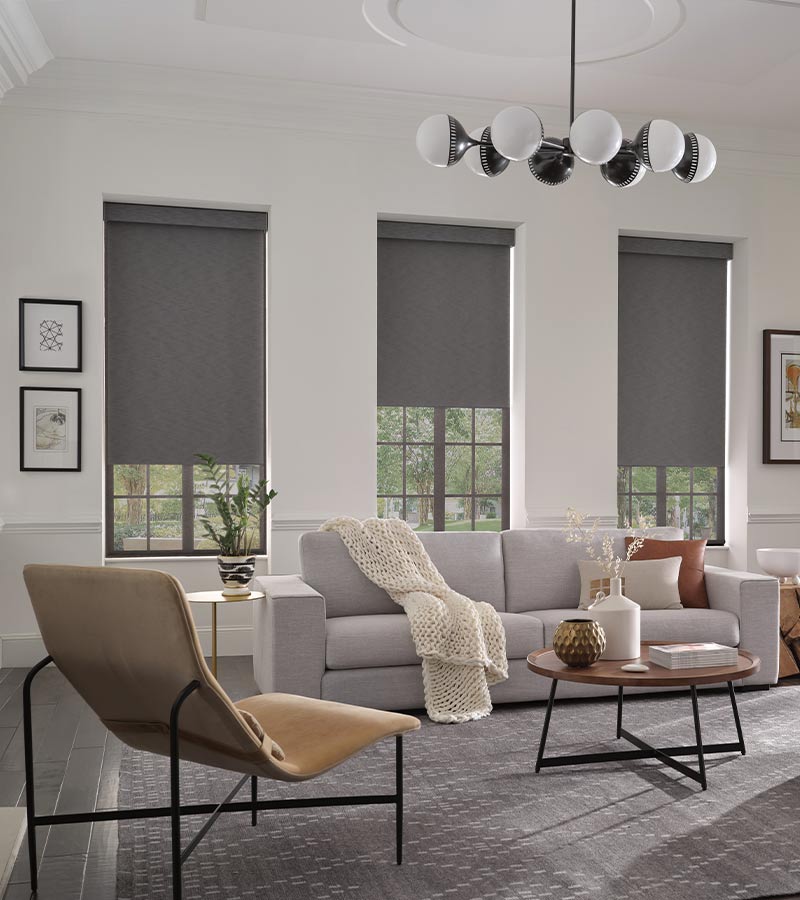
A dual roller shade system houses two independent shades within a single compact cassette. The front shade typically offers light-filtering fabric that softens morning glare while maintaining your view of the Truckee River Walk or the Sierra foothills. The rear shade provides room-darkening or blackout fabric with thermal backing to block up to 99% of incoming light and reduce solar heat gain by as much as 45% (Source: ENERGY STAR, 2023).
You control each layer independently. At 7 AM, lower just the sheer layer to cut glare while you enjoy your coffee. By 2 PM, when afternoon sun turns your living room into a greenhouse, engage the blackout layer to protect your furniture and slash your air conditioning load. This adaptability is precisely what Reno’s climate demands—and what single-layer treatments fundamentally cannot deliver.
Temperature Control Performance: What the Data Shows
Measured Energy Savings for Nevada Homeowners
Window treatments with cellular or thermal-backed construction can reduce unwanted solar heat gain by 60-80% when fully closed (Source: U.S. Department of Energy, 2023). For a typical 2,400 square foot contemporary home in Reno with 150 square feet of west-facing glass, that translates to measurable NV Energy bill reductions during peak summer months.
Consider this breakdown of thermal performance by shade type:
| Shade Type | Solar Heat Gain Reduction | Light Blocking | Best Use Case |
|---|---|---|---|
| Single Roller (Light-Filtering) | 15-25% | 20-40% | Privacy only |
| Single Roller (Blackout) | 35-50% | 95-99% | Bedrooms |
| Dual Roller (Combined) | 45-70% | Adjustable 20-99% | Living areas with temperature swings |
| Cellular (Honeycomb) | 50-80% | Varies by fabric | Maximum insulation priority |
The dual-system advantage becomes clear when you need flexibility. Blackout-only shades force you into darkness to achieve thermal control. Dual systems let you dial in exactly the balance you want—keeping your view of the Reno Arch downtown while still managing heat gain effectively.
Protecting Furnishings from High-Altitude UV Exposure
Your investment in hardwood floors, leather furniture, and artwork faces an invisible threat. At Reno’s elevation, UV radiation intensity increases approximately 4% for every 1,000 feet above sea level (Source: Skin Cancer Foundation, 2022). That means UV exposure through your windows runs roughly 18% higher than coastal cities, accelerating fading and material degradation.
Quality dual-shade fabrics block 95-99% of UV rays regardless of which layer you deploy (Source: Window Covering Manufacturers Association, 2023). This protection operates continuously, whether you’re using the sheer layer for soft light or the blackout layer for thermal control.
Day Night Shades: The Reno Homeowner’s Practical Guide
Operation Strategies for Maximum Comfort and Savings
Successful dual-shade operation follows Reno’s daily rhythm. Here’s how experienced local homeowners maximize their investment:
- Morning (6 AM – 10 AM): Lower sheer layer only to soften eastern light while retaining passive solar warmth—particularly valuable during Reno’s chilly spring and fall mornings
- Midday (10 AM – 2 PM): Raise both layers on north-facing windows to maximize natural light; maintain sheer coverage on south and west exposures
- Afternoon Peak (2 PM – 6 PM): Deploy blackout layers on all western windows to block direct solar gain during NV Energy’s peak demand hours
- Evening: Raise or adjust layers based on privacy and view preferences
This seasonal adjustment pattern can reduce cooling costs by 15-25% during Reno’s June through September heat season (Source: Lawrence Berkeley National Laboratory, 2021).
Motorization and Smart Home Integration
Manual operation works fine for a few windows, but homes in Caughlin Ranch and Somersett often feature dramatic window walls that make daily adjustment impractical. Motorized dual-shade systems solve this challenge elegantly.
Modern motorized systems offer:
- Programmable schedules that automatically adjust both layers based on time of day
- Integration with smart home platforms (Alexa, Google Home, Apple HomeKit)
- Sun sensors that trigger blackout deployment when western exposure reaches critical intensity
- Remote control via smartphone when you’re away from your Reno home
- Quiet DC motors rated for 10+ years of daily operation
For homes with hard-to-reach clerestory windows common in contemporary Reno architecture, motorization transforms dual shades from a luxury into a practical necessity.
Selecting the Right Dual-Shade Configuration for Your Home
Fabric Selection for Reno’s Conditions
Not all dual-shade fabrics perform equally in Reno’s demanding environment. When evaluating options for your home, prioritize these characteristics:
- Openness factor for sheer layer: 3-5% openness preserves views while cutting glare; higher openness admits more heat
- Thermal backing on blackout layer: white or metallic backing reflects heat more effectively than standard fabric
- Colorfastness rating: minimum 5-year fade warranty given Reno’s intense UV exposure
- Dust resistance: Reno’s dry climate means static-prone fabrics collect dust quickly; look for anti-static treatments
The window orientation matters significantly. South and west-facing windows in your ranch-style home need maximum thermal performance. North-facing windows can use lighter-duty fabrics since direct solar gain is minimal.
Installation Considerations for Ranch and Contemporary Homes
Reno’s dominant ranch-style and contemporary architectural styles present specific installation opportunities. Ranch homes typically feature wider, shorter windows that benefit from continuous shade installations spanning multiple window openings. Contemporary homes often include floor-to-ceiling glass requiring custom shade heights exceeding 96 inches—confirm your installer sources fabrics in extended lengths.
Why Reno Homeowners Trust Professional Installation: With over 15 years serving the Reno area, our installation teams understand the specific mounting challenges of local construction. We carry Nevada contractor licensing, offer 5-year installation warranties, and have completed over 2,000 installations across neighborhoods from Somersett to Caughlin Ranch. Every installation includes precise measurement accounting for the window irregularities common in Nevada’s dry climate conditions.
Investment Analysis: Cost vs. Long-Term Value
What Reno Homeowners Can Expect to Pay
Dual-shade systems represent a premium investment compared to single-layer alternatives. For a typical 4-window installation in a Reno living room, expect costs ranging from $1,800 to $4,500 depending on fabric selection and motorization. Motorized systems add approximately $150-300 per window.
However, the ROI calculation favors dual systems when you factor in energy savings and furniture protection. The National Fenestration Rating Council estimates that high-performance window treatments can reduce household cooling costs by $100-250 annually in climates with significant cooling loads (Source: NFRC, 2022). Over a 15-year shade lifespan, that’s $1,500-3,750 in energy savings alone—before accounting for preserved furniture and flooring.
Making Your Decision
Your specific situation determines whether dual shades make sense. They deliver the strongest value for homes with:
- Significant western or southern window exposure
- Open floor plans where temperature management affects large areas
- Premium flooring or furniture requiring UV protection
- Homeowners who value view preservation alongside thermal control
- Properties with high ceilings or hard-to-reach windows benefiting from motorization
If your Reno home checks multiple boxes on this list, dual-shade systems typically deliver meaningful returns within 5-7 years while improving daily comfort immediately.
Ready to experience the difference dual-shade control makes in Reno’s demanding climate? Request a free dual-shade demonstration at your Reno home—experience the difference firsthand! Our local team will show you exactly how these systems perform with your specific windows, your orientation, and your daily routine. Schedule your demonstration today and take control of Reno’s temperature swings.
Frequently Asked Questions
Can dual-shade systems be retrofit to existing window frames without major construction?
Yes, dual-shade systems mount directly to existing window frames or inside window openings using standard bracket hardware. The dual-cassette headrail requires approximately 4-5 inches of mounting depth compared to 2-3 inches for single shades. Most Reno homes accommodate this easily, though some shallow window pockets may require outside-mount installation that extends slightly beyond the frame.
How do dual shades perform during Reno’s cold winter months when heat retention matters most?
During winter, you reverse the operational strategy used in summer. Deploy the blackout layer at night to add an insulating air barrier that reduces heat loss through glass by up to 10% (Source: U.S. DOE). During daylight hours, raise both layers on south-facing windows to capture passive solar heat, then close the blackout layer after sunset to retain warmth. This flexibility is why dual systems outperform single-purpose treatments year-round.
What maintenance do dual-shade systems require in Reno’s dry, dusty climate?
Reno’s low humidity reduces mold and mildew concerns common in coastal climates, but dust accumulation requires attention. Use a soft brush vacuum attachment monthly on both shade layers, working top to bottom. For spot cleaning, most quality fabrics accept light damp-cloth treatment. Motorized components need battery replacement every 2-3 years for rechargeable systems or hardwired systems require zero maintenance. Annual professional inspection is recommended for motorized installations to ensure smooth operation.
Do dual-shade systems qualify for any NV Energy efficiency rebates or incentives?
NV Energy’s residential rebate programs have historically focused on HVAC equipment, insulation, and smart thermostats rather than window treatments. However, window shades with documented thermal performance may qualify for federal energy efficiency tax credits under certain conditions. Consult a tax professional regarding IRS Section 25C credits, which cover some energy-efficient building envelope improvements. Your installation documentation should include manufacturer thermal performance specifications for potential credit eligibility.

